

Echoes Carved in Bone and Clay
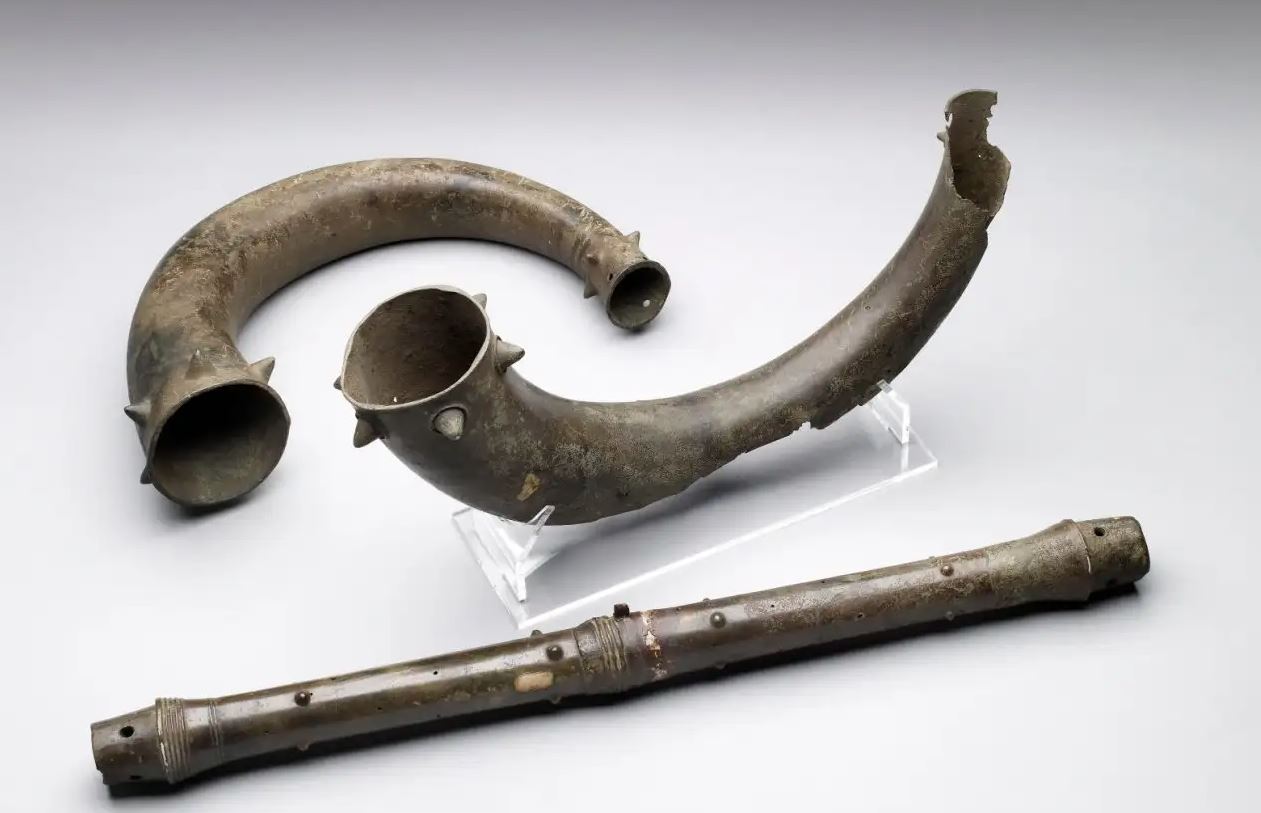
Following the traces of ancient sound through instruments, spaces, and the hands that made them sing
Stone breath and the first pulses
Archaeology meets music where attention touches small marks that most eyes dismiss. A groove on the rim of a shell can be decoration, or it can be the wear left by a cord that kept a rattle ready for quick hands. A long bone with neat holes can be a whistle, a sewing aid, or a pendant, and only context can decide which story holds. When ash blankets a hearth and preserves footprints, researchers kneel and listen for rhythm in the spacing. Short steps near the fire, long arcs toward the painted wall, a sharp pivot beside a drum stone, together they sketch a phrase of movement that once matched pulse and chant. Pebbles sorted by size near an ancient mat may be gaming pieces, or they may be a set of tuned clappers that clicked time for dancers at dusk. Even pigments join the inquiry. Boards stained with red and black in bands can be color codes that guided hands to strike or shake in a set order. The first archaeology of music is a discipline of patience. It asks the excavator to hear with the eyes, to consider sound as a kind of wear upon things, and to admit that the simplest object may carry the memory of a song. When a cave yields a hollow stalagmite pocked by repeated blows, when a riverside camp yields shells with pierced lips that chatter when strung, the case for intentional sound grows stronger. What began as survival learned to move as pattern, and pattern invited memory, and memory invited celebration. These are the earliest steps toward an art that travels better than any wall or roof.
Hands that turned matter into voice
In every era makers learned to argue with matter until it agreed to sing. Clay whistles responded only when passage and cavity reached a careful relation, so potters practiced on scraps until a bright trill appeared and stayed. Reed pipes demanded a slit the width of a thumbnail and a bevel that caught breath without hiss. String makers twisted gut and plant fiber and tested each strand against damp, heat, and strain until a reliable voice emerged. Wood workers carved sound boxes from willow or cedar and learned that small changes in thickness altered both sustain and bite. Metal workers cast bells whose lips curved as carefully as the lip of a cup for sacred oil, since the contour decided which overtones would blossom and which would fade. The same craft sharpened ceremonial blades and tuned chimes, which tells us that skill does not live in a single category. A foundry that could pour bronze for a plow could pour bronze for a gong. Wear patterns on pegs, scratches on bridges, traces of resin on strings, soot inside flutes, all serve as notes in a score that has waited centuries for readers. Makers traveled with their tools and returned with new curves and new alloys. They learned to listen with their fingertips. A board that vibrates evenly will answer a knock with a friendly bloom, while a board with hidden knots will sound dull and promise grief later. When a reconstructed lyre grows quiet with the sun and wakes again at night air, we learn that ancient craft also planned for the hour of performance, not only for the look of the thing at noon.
Rhythm as architecture and crowd
Music organizes movement, and old cities reveal where that organization unfolded. Plazas hold proportions that fit step patterns shared across households. Narrow lanes squeeze parades into files, then release them into squares where circle dances breathe. Steps show wear in arcs that match repeated turns by bodies that remembered choreography from childhood. Acoustic tests across ruins confirm what eyes suspect. A singer on a terrace fills a court without strain, while the same singer loses power at ground level near a gate. Builders knew this and shaped balconies and wall niches that return voice to the listener instead of scattering it into the sky. Corridors that join courtyards act like measured rests in a long phrase, slowing a procession so arrivals feel intentional rather than chaotic. Drain covers ring in different notes when carts pass, which suggests that some engineers tuned street furniture to compositional effect, a small civic flourish that today we would call design for delight. The archaeology of crowd rhythm also reads storage and scheduling. If a pantry near the plaza holds hundreds of cups, if the nearest well has broad steps and a long basin, then the space likely handled feasts where sound led the program of serving and blessing. A city that learned to carry song without machinery learned other forms of agreement as well. You can feel this when you stand under a broken vault and clap once. The answer arrives from curved stone with a timing that calls bodies into a common beat, the original invitation to share work and joy.
Writing sound before letters
Notation is older than alphabet if we include the many ways people counted rhythm and melody with marks, knots, color, and patterned objects. A row of indentations along a pot can be spacing for decoration, or it can be a recipe for strokes during a festival. Loom weights arranged in a particular order allow a song to be encoded as a weaving draft, which a skilled singer can read by touch when light is low. Bone tallies near flutes suggest practice logs kept by a teacher. A set of scratches, neatly spaced, grows denser where a learner spent extra time. Carved staffs on temple steps can mark the length of a chant to match the climb. A child who skips two grooves, then sings, then skips three, is performing from stone as clearly as from paper. Later scripts make the case plain. Tablets that mix hymns and numbers show both pitch and duration as values to be managed with care. Yet even without clear scripts, memory aids multiplied. Colors on drum rims told the order of strikes. Beads on a cord told the shape of a refrain. The point was not to freeze a masterpiece. The point was to keep ritual honest and teachable. Music that belonged to a village could be repaired after a hard winter because its bones were stored in many forms, from the wear on a stick to the tally on a wall. Archaeology reads this layered memory the way a conductor reads a score, not as ornament, but as instruction about pace, accent, and the return of silence.
Trade routes and the spread of sound ideas
No landscape kept its music to itself for long. Bells crossed mountains on the necks of pack animals, and the tone of a distant valley rang across new streets at dawn. Merchant ships carried drums whose skins learned unfamiliar humidity and found surprising voices. Scales migrated by ear. A trader heard a pleasing interval in a port and asked a maker at home to fashion a pipe with the same step. Pilgrims helped as well, since shrines drew strangers into one chorus for a night. Archaeology follows these trails through alloy recipes, wood species, and decoration that borrows motifs from far away workshops. A rattle carved like a fish in a desert town tells of a river culture that shared both food and sound. A harp with a bridge shape rare in its region shows that a craftsman traveled, or that a noble demanded something heard abroad. Along the same roads moved stories about how to listen. One group praised the calm of long tones that widen the chest. Another loved lines that leap like goats across terraces. When peoples met, they traded more than goods. They traded reasons to gather, and reasons to forgive. You can read the result in layers of repair. Instruments that lived through slow changes will carry patches from several traditions. A copper rivet made in one style, a wooden shim carved in another, a lacquer tint familiar to a third, together they prove a shared workshop under open sky. Music traveled because people trusted it to carry their best selves without argument.
Burial sound and the quiet grammar of status
Graves speak in frequencies that the living once used to mark belonging and rank. A modest burial with a single rattle suggests music as common comfort, shared by many and perfected by none. A rich tomb with nested drums, tuned bells, and a harp shaped from rare wood tells of a household that used sound for display and for diplomacy. Placement matters. Instruments near the head imply personal skill, while instruments near the feet can signal attendants or the promise of entertainment in the next world. Wear patterns complicate the easy story. A costly lyre with untouched bridge may be a symbol only, while a plain flute with heavily smoothed holes belonged to someone who played until calluses became a signature. Children sometimes receive tiny instruments that cannot sound. These are tokens of a future interrupted, but they are also lessons that the community wished to place in lasting care. In some regions clay figures show players in procession, and the number of figures matches the size of the group that would attend a leader in life. In other regions graves hold tuning stones that ring when struck, perhaps to call the dead by name during memorial days. Archaeology refrains from romance by testing wood species, fiber twists, and residues that mark oils, smoke, and sweat. Yet even the most cautious report carries a quiet awe. Sound does not fossilize, but intention does. In a chamber sealed for centuries a set of tools waits for breath and touch, proof that people believed music could escort a soul across the hardest border.
Laboratories of revival and the ethics of sound
To move from shard to song, teams gather across disciplines. Woodworkers, metal casters, potters, acousticians, singers, and dancers meet around a table of fragments and decide how to proceed with care. They make replicas with measured differences, then test them in halls that match ancient volumes. They record spectra, but they also watch faces. Does this drum invite feet, or does it scold them. Does this flute tire the breath or help it relax into long phrases. Museums host concerts that double as experiments, and audiences become partners who report how the room felt when a note bloomed near a column. Ethics quietly leads the room. Makers avoid claiming certainty when they hold only a plausible path. Performers announce which parts of a piece are inference and which parts are strict copy. Communities descended from the makers have first say on what should be played, when, and for whom. When a design comes from a burial, some groups prefer silence and a respectful display of craft only. When a design comes from festival deposits, many welcome the return of sound with thanks. The goal of revival is not a perfect museum of noise. The goal is understanding. A curved bridge can reveal why a style of singing grew in one region and not another. A heavy bell can explain why a parade rested at a certain corner. Through this work we learn that sound is also a form of governance. It shapes attention, it shares courage, and it teaches time. To revive a tone is to revive a way of living together for the length of a phrase.
Soundmarks and memory in the open air
Not all traces reside in tools. Landscapes keep sound the way a cloth keeps scent. A cliff that throws back echo can become a seasonal stage. A grove that muffles wind becomes a school for subtle rhythm. River bends where stones click underfoot mark places where teaching began with walking in time across the shallows. Villages marked hours with noises that belonged to their ground. A mill wheel struck a board once for each bucket, a shepherd blew a horn that used the valley as a natural bell, a watch called the change of guard with a pattern that the street could hum by habit. Archaeology of music listens for these soundmarks through ruins and through documents, but also through wear on the land itself. A flat patch on a ridge with few artifacts can still be a chorus field if wind from three sides sings a steady pitch. Old trees reveal pruning that opened a view toward a hill used for signaling with bright discs. Even the placement of livestock speaks. Bells hung near river paths warn rowers at night, while bells hung near inner fields teach children the shape of safety. When modern recordists carry microphones to these places and stand still at dawn, they capture a quiet that carries the same structure. Rivers set the tempo. Birds layer counterpoint. Far tools add a low drone that holds the piece together. In such work we glimpse a continuity between living ground and living song. The land remembers, and when people answer with care, the memory becomes future.
What the past asks of future ears
The study of old music does more than satisfy curiosity. It restores choices that hurry can conceal. A street can be tuned by kiosks and trees so casual singers feel brave. A school can teach meter with steps before it teaches notation, repeating a method that kept communities coherent when paper was rare. Instrument makers can borrow curves and cavities that once made resilience audible during long winters. Planners can set aside spaces where voice carries without machines, lowering cost and raising dignity. Festivals can honor the craft of listening as much as the craft of playing, since a village that hears itself will repair itself faster after loss. The archaeology of music also corrects a common mistake. It shows that joy is not luxury. Joy is infrastructure. Where rhythm is steady, work aligns. Where melody is familiar, strangers find a temporary home. Where tone is warm, speech softens and quarrels shrink. To read bone flutes and clay bells is to read a manual for that kind of city. We are heirs to tools that once organized breath and hope. If we learn to use them again with kindness, the past will become a partner rather than a trophy. Then caves will teach halls, and halls will teach streets, and streets will teach the next child who claps once under an arch and smiles at the answer, because the stone has remembered the song and is ready to sing it back.